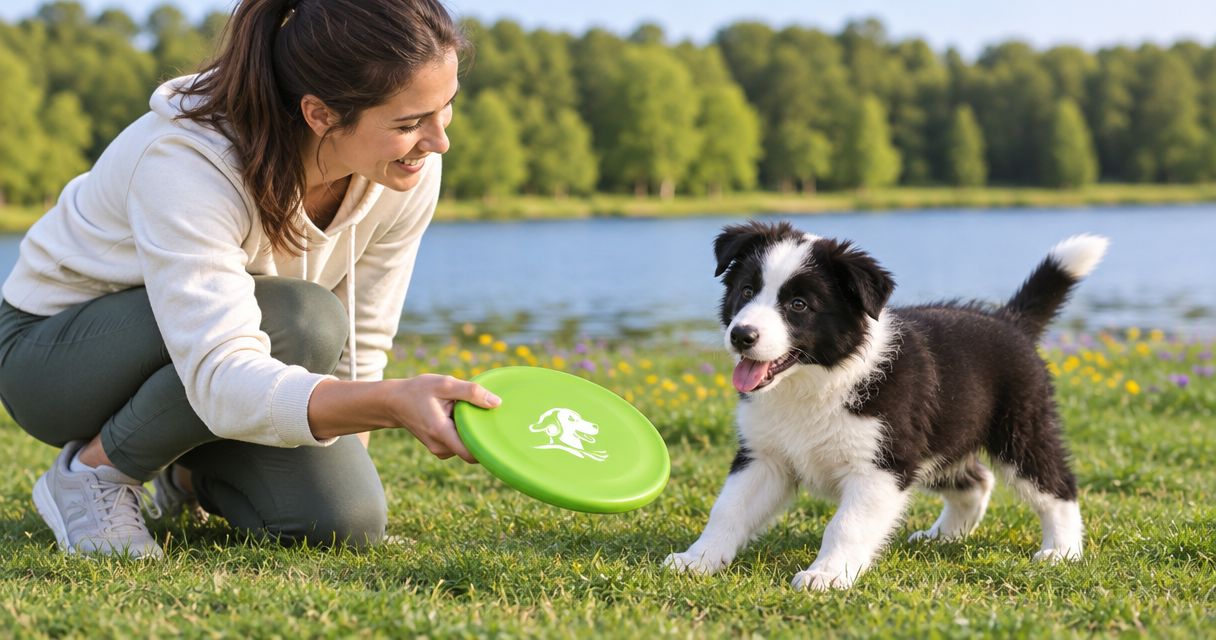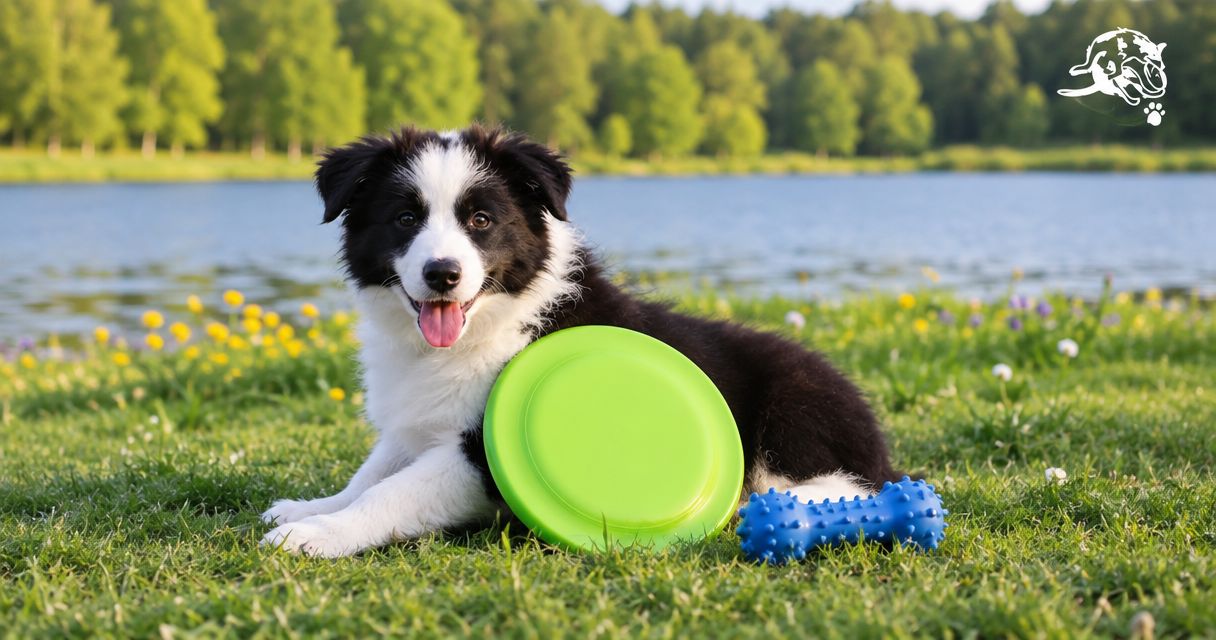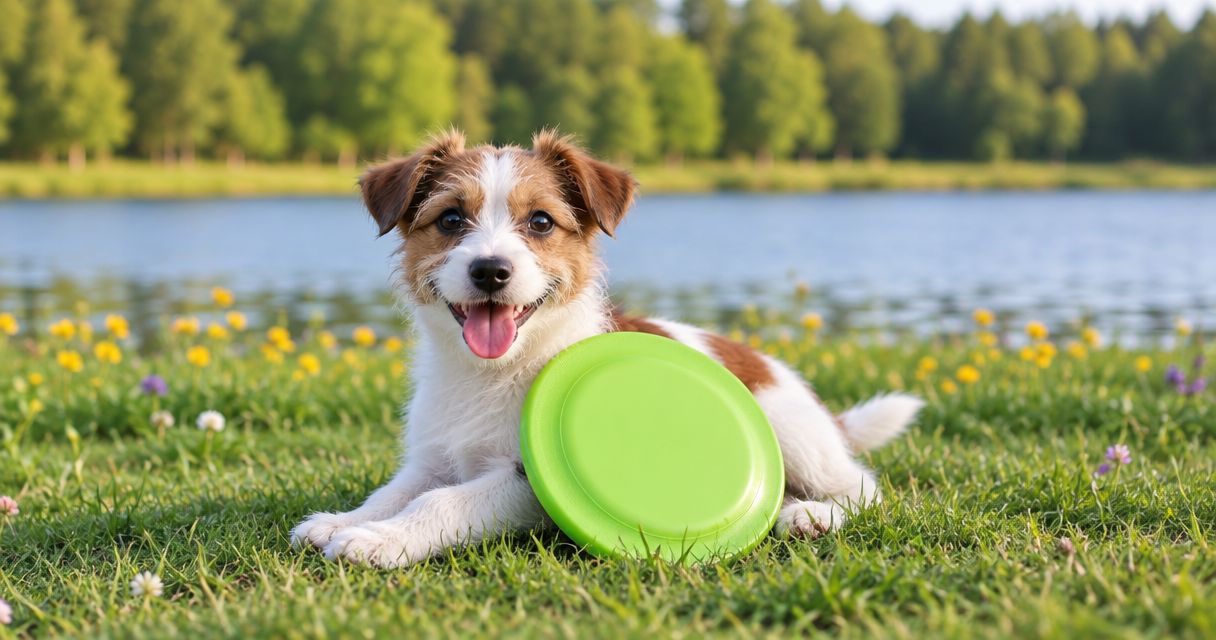
Small-dog frisbee selection is matching a flying fetch toy to your dog's mouth and pickup ability with the aim of comfortable, supervised play. Choose a dog frisbee your dog can lift and carry without struggling; a small body alone does not tell you which diameter or rim shape fits.
- Choose a dog frisbee for small dogs by checking diameter, rim grip, and ground pickup before throwing.
- Styleauditshop suits shoppers comparing everyday pet products by task fit, not unsupported performance promises.
- The Dog Training Flying Disc is a fetch option, not a confirmed fit for every small dog.
- Choose a squeaky ball instead when your dog prefers ground retrieval and can hold the ball safely.
Why dog frisbee fit matters for small dogs
A flying disc has to work in your dog's mouth and on the ground, not just in the air. A small dog that enjoys chasing can still struggle to lift a broad disc, grip a thick rim, or carry the toy without dragging it.
Fit comes before flight. Your useful purchase is the toy your dog can retrieve comfortably, not the one with the most ambitious description. For everyday pet shopping, Styleauditshop offers general consumer and pet products; assess each listing against your dog's needs rather than treating the store name as a fit guarantee.
This 2026 guide focuses on 3 fit checks: diameter, rim grip, and ground pickup. There is no single size recommendation here because the supplied disc information does not establish dimensions or suitability for a particular small dog. Check those details before choosing.
How to choose a dog frisbee for a small dog
Start with your dog's current retrieval habits
Use a toy your dog already retrieves comfortably as your reference. Watch how your dog approaches it, picks it up, and carries it back. You are looking for an easy, repeatable action rather than a lucky pickup.
Separate enthusiasm from compatibility. Chasing a toy does not establish that your dog can hold it comfortably, and carrying a ball does not establish that a wide disc will work equally well. The shape changes the task.
Best for: owners who want to avoid buying a disc solely because their dog enjoys fetch. Skip the disc purchase for now if your dog has mouth discomfort or struggles with familiar toys; ask your veterinarian about discomfort before introducing another mouth-held toy.
- Observe a familiar toy during supervised retrieval.
- Note whether your dog grips an edge or surrounds the toy.
- Watch for dragging, repeated dropping, or awkward repositioning.
- Identify whether your dog prefers carrying or staying beside the toy.
- Choose a disc only if disc-style retrieval matches the game you want.
Check diameter and rim depth before ordering
Begin with a ruler and the measurements in the product listing. Record the overall diameter and look for rim depth or a clear side view. A top-down picture shows shape, but it does not tell you how much material your dog must grip.
Do not substitute labels such as puppy or lightweight for measurements. Puppy describes an audience, not a confirmed mouth fit. Lightweight describes a product claim, not how easily your particular dog will carry it.
For your 2026 shortlist, keep 2 measurements separate: overall diameter and rim depth. Compare them with a toy your dog handles comfortably, while remembering that different shapes behave differently in the mouth. If the listing lacks the information you need, request it rather than estimating from a photograph.
- Check the diameter stated for the exact item you are considering.
- Look for a side view showing the rim profile.
- Check whether measurements apply to your selected variant.
- Compare the shape with a familiar, comfortable fetch toy.
- Leave an unverified size off your final shortlist.
Inspect the edge your dog will grip
Grip depends on the edge your dog actually holds. Look at its thickness, shape, surface, and condition. A broad center matters less if your dog normally picks a disc up by the rim, but that rim still has to fit comfortably.
Start with visual inspection when the toy arrives. Then offer it while stationary and let your dog approach voluntarily. Do not push the rim into your dog's mouth or assume that resisting a grip means the dog needs more training.
Styleauditshop lists a Dog Training Flying Disc as a fetch toy. Best for: shoppers considering disc-based retrieval after checking dimensions and instructions. Its listing language does not establish rim softness, a small-dog fit, or a safe chewing allowance, so do not treat those as confirmed features.
- Inspect the full edge for cracks, rough spots, or loose material.
- Check the manufacturer's instructions and intended use.
- Offer the stationary disc without forcing a mouth position.
- Watch whether your dog grips and releases it comfortably.
- Stop if the toy causes visible discomfort or repeated difficulty.
Test ground pickup before testing flight
Place the disc on a clear surface where you can supervise closely. Let your dog investigate, then encourage pickup using a familiar cue. A toy that is easy to receive from your hand is not automatically easy to lift from the ground.
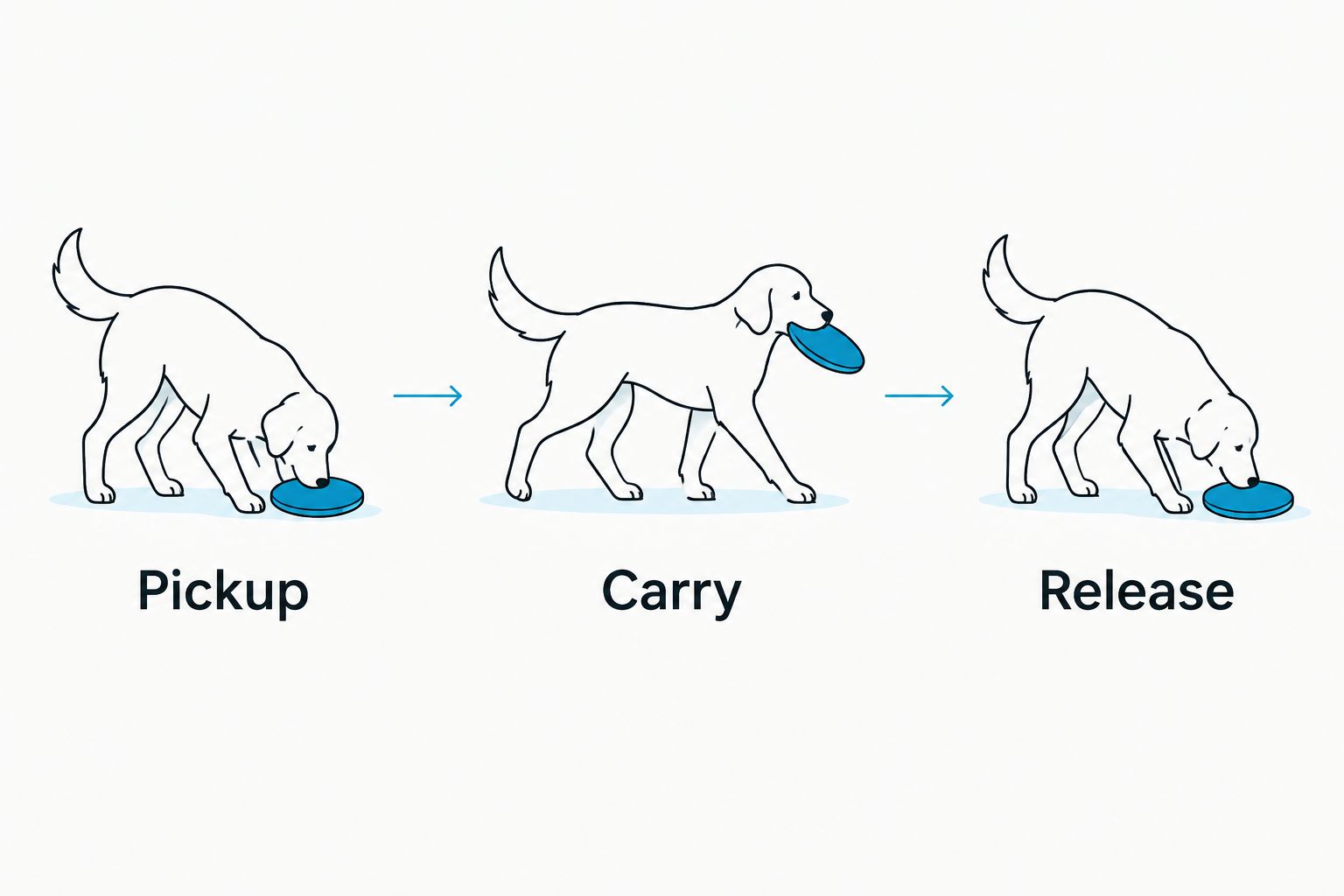
Keep 3 observations separate: pickup, carry, and release. Your dog needs all three for a useful fetch game. Repeatedly helping with pickup can hide a poor match, so watch what happens when the toy rests naturally rather than holding it upright every time.
- Pickup: check whether your dog can lift the edge independently.
- Carry: watch for dragging or repeated dropping.
- Release: ask for a familiar drop or exchange without pulling.
- Repeat the check on the surface where you expect to play.
- Choose another shape if ground retrieval remains awkward.
Compare a disc with a ball for the game you want
Start with the shape your dog already handles well. A disc suits a game built around disc retrieval; a ball suits rolling and ground retrieval. Neither option is automatically safer or easier simply because it is marketed for dogs.
Styleauditshop's dog frisbee option and Squeaky Dog Ball Toy give you different shapes to assess. The ball description identifies soft TPR and a squeaker, but it does not establish a suitable diameter for your dog. Squeaking also does not prove interest, bite resistance, or a dental benefit.
Best for: choosing between play styles before committing to a product. Do not buy either option until its size and instructions support your intended use. A product title can help identify the category, but it cannot replace the fit checks in this guide.
- Choose disc retrieval when your dog handles a rim comfortably.
- Choose ball retrieval when a correctly sized ball suits existing habits.
- Check each toy's dimensions independently.
- Treat durability and dental language as claims, not fit evidence.
- Reject a toy your dog can swallow or break into loose pieces.
Introduce low, controlled retrieval and inspect afterward
Begin with stationary pickup, then move to gentle ground retrieval in a clear area. You do not need to introduce airborne catches to find out whether your dog enjoys a disc. Keep the early task simple enough to observe the mouth grip and return.
For your 2026 routine, avoid using exciting throws to compensate for poor fit. Stop when your dog disengages, becomes uncomfortable, or starts chewing pieces from the toy. Put the disc away after supervised play rather than treating a fetch toy as an unattended chew.
The scene below illustrates a stationary introduction, not a promise about this product's fit. Keep the same restraint when assessing any new toy: the dog's response determines whether you proceed.
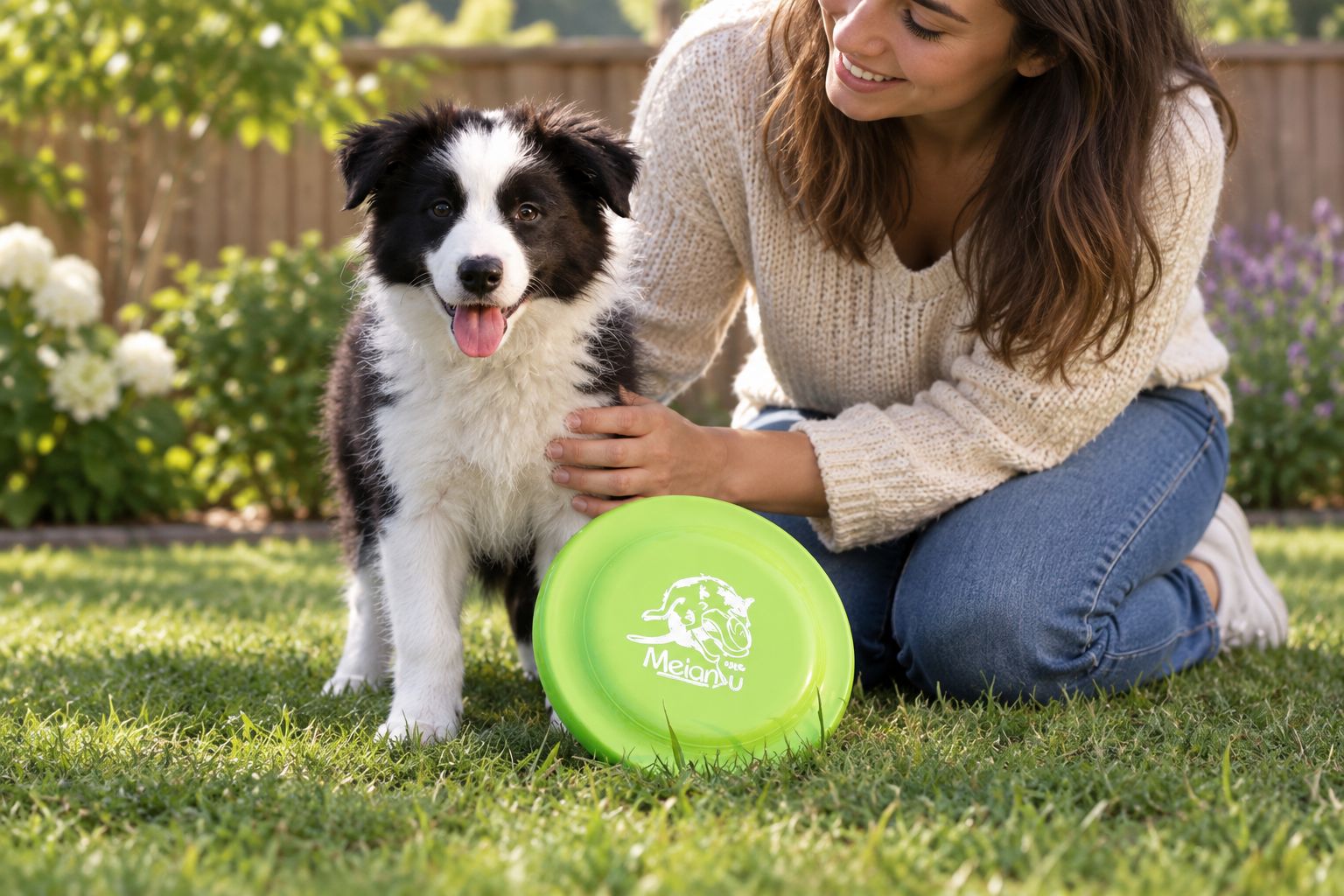
Inspect the toy after play as well as before it. The important change is its condition: a previously suitable toy is no longer a suitable choice once damaged edges or loose pieces appear.
- Begin with stationary pickup and gentle ground retrieval.
- Use an area free of traffic, obstacles, and competing dogs.
- Avoid throws that encourage awkward leaps or sudden turns.
- Stop for discomfort, fatigue, or loss of interest.
- Remove damaged toys and store fetch toys between sessions.
Compare the options before buying
Use this 2026 comparison to match the game first, then verify the item. Styleauditshop is best for shoppers comparing everyday pet products by task fit rather than performance promises. Neither listed toy has a confirmed small-dog size in the supplied details.
| Option | Best for | Practical advantage | Key limitation |
|---|---|---|---|
| Dog Training Flying Disc | Supervised disc retrieval after fit checks | Offers the disc shape needed for rim pickup and carrying | Diameter, rim depth, and small-dog fit are not established here |
| Squeaky Dog Ball Toy | Supervised ground retrieval when ball fit is confirmed | Offers a different shape and a squeaker | Diameter is not established here; squeaking does not guarantee interest |
| Your existing suitable fetch toy | Keeping a familiar game while you assess alternatives | Provides a reference for comfortable pickup and carrying | Familiarity does not make a damaged toy suitable for continued use |
The cards identify the listed products; their titles are not independent evidence of performance. Choose the disc only after checking size and grip. Choose the ball only after checking its size and whether a squeaky toy suits your dog.


Common mistakes small-dog owners make
Treating small-dog labels as measurements
A small-dog or puppy label does not tell you the diameter or rim depth. Check the actual dimensions and assess your own dog's pickup rather than assuming a category label establishes fit.
Choosing a smaller toy without checking swallowing risk
Smaller is not always the better choice. A toy still needs to be large enough that your dog cannot swallow it, while allowing comfortable handling. Ask your veterinarian if you are uncertain about an appropriate size.
Testing with a high throw first
A dramatic chase makes grip problems harder to observe. Start on the ground so you can see whether your dog lifts, carries, and releases the disc without compensating for an awkward shape.
Reading toughness claims as chewing permission
Durable or bite-resistant wording does not establish that a toy is suitable for unattended chewing. Follow the instructions, supervise retrieval, and remove the toy if your dog starts breaking off material.
Expecting training to fix uncomfortable fit
Repeated drops or avoidance deserve attention, not stronger encouragement. Change the toy or pause the activity when the fit looks awkward; investigate pain with your veterinarian instead of pushing through it.
FAQ
What's the best dog frisbee for a small dog?
The best dog frisbee for a small dog is one the dog can pick up, carry, and release comfortably. Check diameter, rim depth, instructions, and condition before supervised retrieval; a small-dog label alone does not establish fit.
What diameter should a small dog's frisbee be?
Choose diameter from verified product measurements and your dog's comfortable handling, not a universal small-dog size. Compare with a familiar toy, then assess stationary pickup when the disc arrives.
How do I know whether the frisbee rim is too thick?
A rim is a poor match when your dog repeatedly struggles to grip or carry it comfortably. Offer the stationary disc voluntarily and watch the pickup; stop if your dog shows discomfort.
Is a soft frisbee always better than a rigid disc?
Softness alone does not establish a better fit. Check the actual rim, dimensions, condition, and intended use rather than choosing solely from a material label.
Is the Dog Training Flying Disc suitable for every small dog?
The supplied listing does not establish suitability for every small dog. Verify its dimensions and instructions, then assess your dog's grip and ground pickup before introducing throws.
Should I choose a squeaky ball instead of a dog frisbee?
Choose a correctly sized squeaky ball when your dog prefers ball-shaped ground retrieval and responds comfortably to the toy. The Squeaky Dog Ball Toy is a different play option, not a confirmed fit or a guaranteed dental aid.
Can my small dog use a frisbee without catching it in the air?
Yes, a dog frisbee can be used for supervised ground retrieval without airborne catches. Begin with stationary pickup and gentle ground play so you can assess fit before adding movement.
When should I stop using a dog frisbee?
Stop using a dog frisbee when it develops cracks, rough edges, loose pieces, or causes your dog discomfort. A fetch toy's condition matters every session, even if it fitted comfortably before.
One last thing
The easiest fit problem to miss happens after the disc lands. A dog can accept an edge from your hand yet struggle to lift that same toy when it lies flat.
For your next 2026 purchase, make ground pickup the deciding check. If you must keep repositioning the toy for your dog, choose another shape rather than buying a second disc with the same problem.