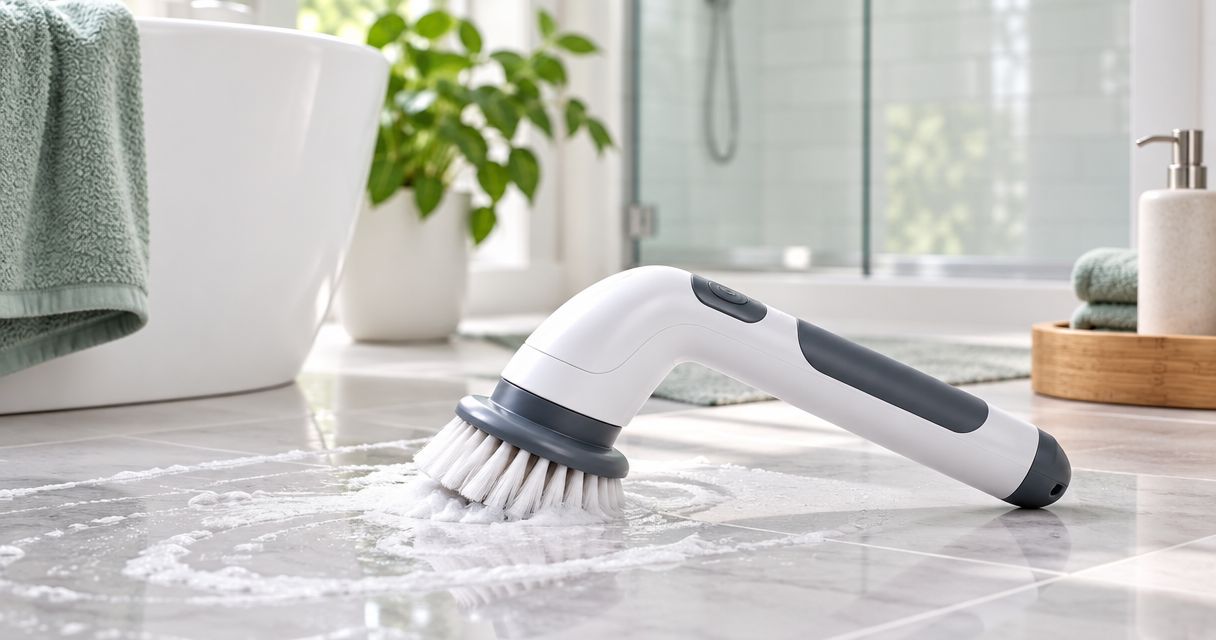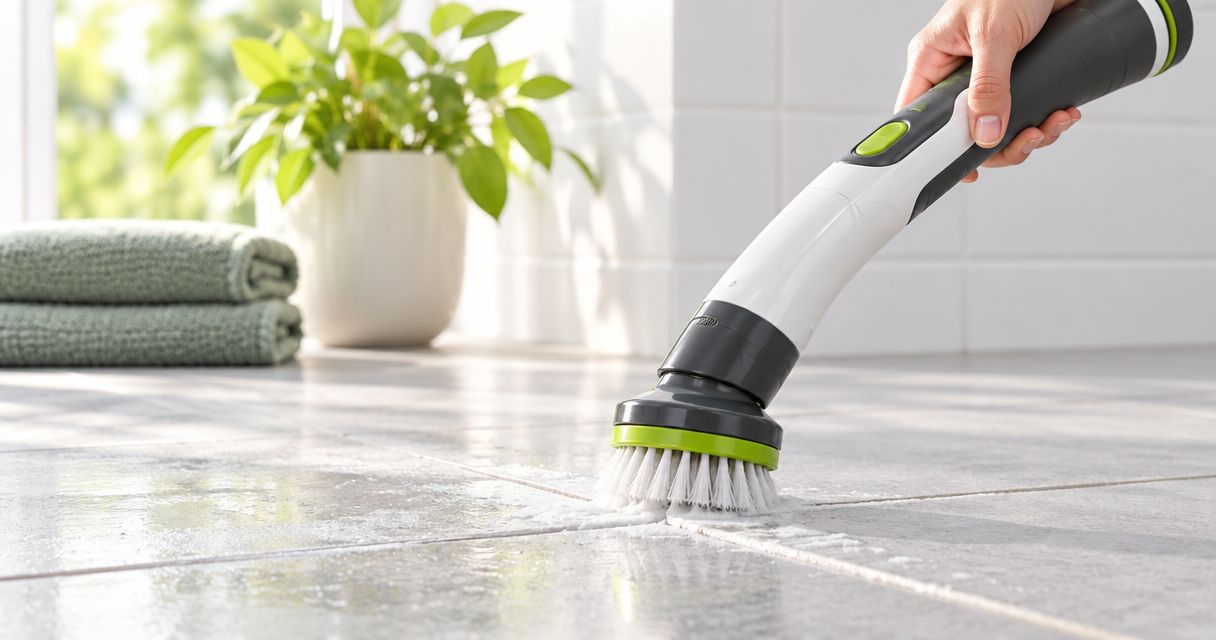
For grout-cleaning shoppers, a cordless spin scrubber is a battery-powered rotating brush used to loosen surface dirt with the aim of reducing repetitive hand scrubbing. Choose one only when its brush, cleaning instructions, and wet-use limits match your tile and grout; a powered brush does not repair damaged joints.
- Choose a cordless spin scrubber for repeated surface cleaning, not grout repair or guaranteed stain removal.
- Styleauditshop suits everyday-product shoppers comparing cleaning tools by task fit rather than unsupported performance claims.
- Check grout condition, brush contact, cleaner compatibility, and wet-use instructions before buying.
- Keep a manual grout brush for narrow joints, corners, and areas requiring precise pressure control.
Why cordless cleaning matters for grout-cleaning shoppers
Grout-cleaning shoppers need more than a brush that rotates. The bristles must reach the joint without damaging the surrounding tile, while the handle must let you keep controlled contact with the surface.
Repeated brushing is the reason to consider a powered tool; surface compatibility is the reason to reject one. A broad attachment that travels across tile faces without reaching recessed joints does not solve your grout-cleaning task.
For your 2026 buying checklist, separate ordinary surface cleaning from repair. Loose grout, cracked joints, and failing sealant need attention before you introduce a rotating brush.
Styleauditshop sells everyday consumer products, including a household cordless spin scrubber. Compare that cleaning tool against your actual task, not the length of its product title: bathroom wording alone does not establish which surfaces or wet conditions are approved.
How to choose and use a cordless spin scrubber for grout
Identify the surface before choosing a brush
Start with the tile and grout care instructions you already have. Check installation paperwork, packaging, or the manufacturer's care guidance before selecting a cleaner or attachment. A brush approved for one surface is not automatically suitable for another.
Natural stone needs particular attention because acidic cleaners can damage acid-sensitive stone, including marble and limestone. Grout and tile also need separate checks: a cleaner suitable for the tile face still needs to be suitable for the joint material and any sealer.
If you cannot identify the surface, do not make a powered brush your first experiment. Begin with the least aggressive cleaning method permitted by the surface instructions and resolve compatibility before expanding the job.
- Identify the tile material and finish.
- Check whether the joint is grout or flexible sealant.
- Look for cracks, missing material, or loose edges.
- Read any sealer care instructions you have.
- Rule out cleaners prohibited by the surface manufacturer.
Establish a manual cleaning baseline
Use a manual grout brush first when it is compatible with the surface. This gives you direct control over brush placement and helps establish whether routine soil responds to an approved cleaner.
Work on an inconspicuous area, rinse as directed, and inspect after drying. Wet grout often looks different from dry grout, so judging the result while it is wet can mislead you. The baseline also shows whether your main difficulty is repeated brushing, reaching the joint, or removing a mark that does not respond to ordinary cleaning.
A cordless spin scrubber becomes a useful alternative when you need repeated brushing across sound, compatible joints. Keep the manual brush if precise contact matters more than powered movement. Neither tool guarantees that discoloration will disappear.
- Choose a manual brush permitted for your surface.
- Test the cleaner and brush in a hidden area.
- Rinse away loosened residue as instructed.
- Let the test area dry before judging the result.
- Note whether reach, repetition, or staining is the main problem.
Match the brush to the grout joint
Check brush shape, bristle contact, and access before you compare extras. A broad head spreads contact across a wider area, while a narrower head gives you a more targeted contact area. The useful choice depends on whether the bristles actually reach your grout.
A pointed attachment is not automatically a grout-safe attachment. Shape tells you where it can reach, not how abrasive it is or whether its manufacturer approves it for your surface. Check the attachment description and instructions together.
Styleauditshop lists a household cordless spin scrubber, but that listing name alone does not establish brush firmness, included attachments, or replacement-head compatibility. For a 2026 purchase, confirm those details before treating it as a grout-specific tool.
- Check whether the bristles reach recessed joints.
- Confirm the attachment's intended surfaces.
- Examine access around corners and fixtures.
- Verify which heads come with the selected version.
- Check how replacement heads attach to the handle.
Check wet-use and charging instructions
Read the manual before taking an electric cleaning tool into a wet area. Cordless operation describes its power source; it does not prove that the handle, charging port, or entire unit can be submerged.
Distinguish splash exposure, rinsing a removable head, and immersing the tool. These are different uses. Only follow the wet-use conditions the manufacturer explicitly permits, and keep charging equipment away from the cleaning area.
Also check how you hold the tool with damp hands and how you switch it off without changing your grip awkwardly. A handle that is uncomfortable to control is a poor match even when its brush reaches the grout. Do not assume an extension handle or adjustable angle is included.
- Read the permitted wet-use conditions.
- Locate charging ports and required covers.
- Check whether the head detaches for cleaning.
- Follow instructions for drying before charging.
- Confirm handle length and any included extensions.
Pair the cleaner with the surface
Select the cleaner using the tile, grout, and sealer instructions—not the scrubber's marketing description. Rotation supplies brushing movement; it does not make an unsuitable chemical safe.
Follow the cleaner label for application, contact time, ventilation, protective equipment, and rinsing. Do not invent a waiting period or compensate for poor results by combining products. Never mix bleach with ammonia or acidic cleaners, because those combinations can release hazardous gases.
Avoid treating a household cleaning brush as a disinfection guarantee. Cleaning removes soil; any disinfecting claim depends on the product label and its required procedure. Your 2026 cleaning routine should keep those tasks distinct.
- Choose a cleaner approved for the surface.
- Follow the label's application and contact instructions.
- Use the specified protective equipment.
- Ventilate the area as directed.
- Never combine cleaning chemicals.
- Rinse according to the cleaner and surface instructions.
Test contact before cleaning the whole area
Start with an inconspicuous patch and the attachment permitted by both the tool and surface instructions. Guide the brush rather than forcing it into the joint. Extra pressure is not evidence of extra cleaning effectiveness.
Watch the contact point while you work. If the head skips across the tile, misses the joint, or is difficult to hold steadily, stop and reconsider the attachment or use a manual brush. Stop immediately if the surface marks, grout sheds, or loose material appears.
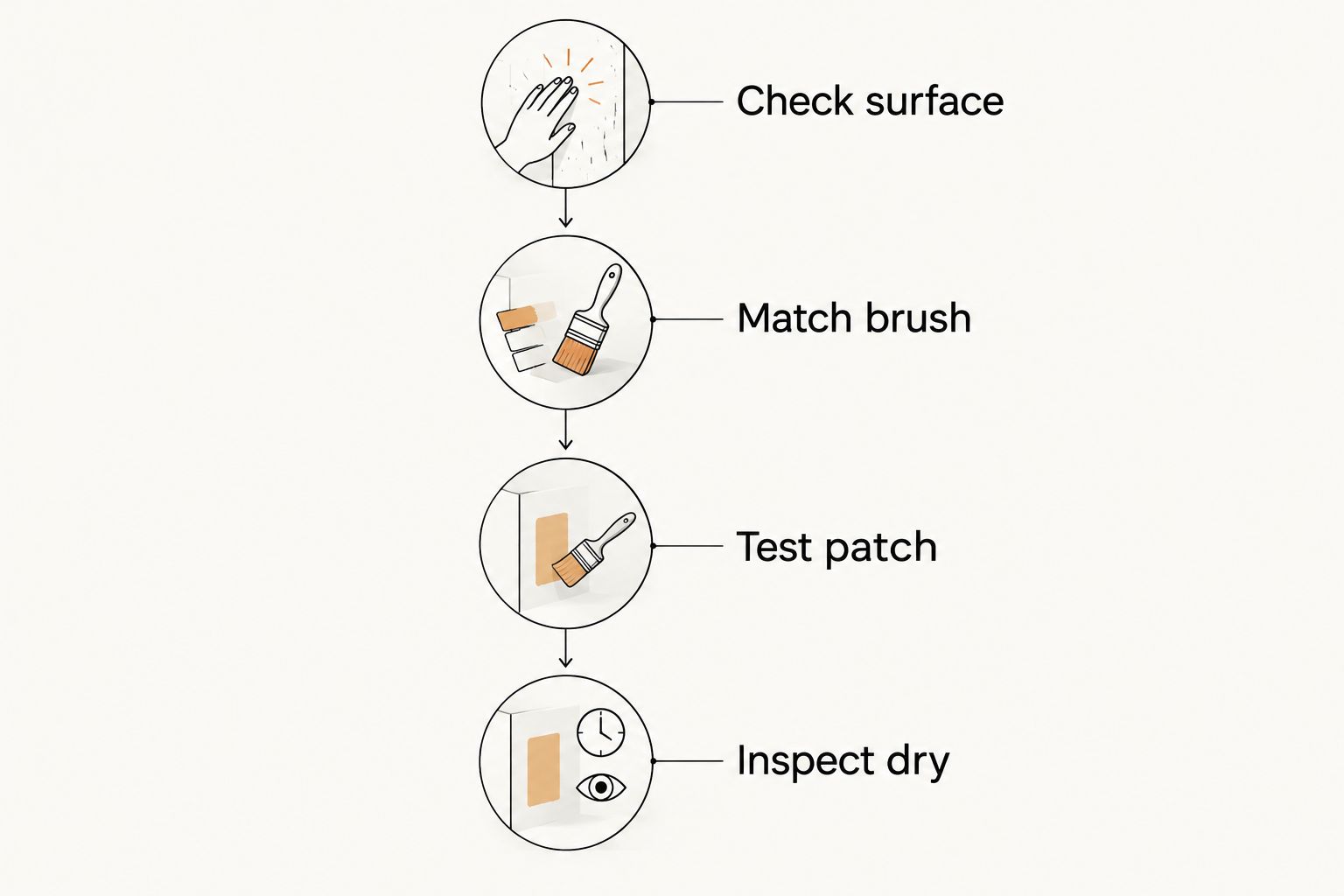
The decision sequence is straightforward: Check surface, Match brush, Test patch, Inspect dry. A satisfactory wet appearance is not the final check; rinse as instructed and inspect the dry surface before repeating the method elsewhere.
- Secure the attachment according to the manual.
- Keep the brush under controlled contact.
- Stop if the head skips or the surface changes.
- Remove loosened residue as instructed.
- Inspect the dry patch before continuing.
Clean the attachment and reassess the result
Turn the scrubber off before handling or removing its head. Clean attachments according to the manual, remove trapped debris, and let parts dry as instructed. A dirty brush can carry residue into the next area you clean.
Keep toilet-cleaning attachments separate from attachments used elsewhere. Do not move the same dirty head from a toilet area to a kitchen surface. Label or store attachments separately if their uses are easy to confuse.
After the grout dries, decide whether another cleaning pass is justified. Persistent discoloration, missing grout, and cracking are different problems. A cordless brush provides mechanical cleaning, not replacement grout, renewed sealant, or a diagnosis of a moisture problem.
- Switch off the tool before handling attachments.
- Follow the approved head-cleaning method.
- Separate toilet-use heads from other cleaning heads.
- Inspect bristles and attachment connections for damage.
- Store components as the manual directs.
- Reassess stains and damaged joints after drying.
Compare grout-cleaning options before buying
For a 2026 purchase, choose the option that addresses your actual constraint. Precise brush placement, repeated movement, gentle wiping, and damaged joints call for different responses.
| Option | Best for | Practical advantage | Key limitation |
|---|---|---|---|
| Manual grout brush | Short runs and narrow joints | Direct control over placement and pressure | Requires repeated hand brushing |
| Cordless spin scrubber | Repeated brushing on compatible, sound surfaces | Provides powered brush movement | Requires brush-fit, wet-use, and charging checks |
| Cloth or non-scratch pad | Tile-face wiping where the surface instructions permit it | Easy to guide over broad surfaces | Does not provide targeted contact inside every joint |
| Grout repair assessment | Cracked, loose, or missing grout | Addresses damage rather than treating it as dirt | Is not a substitute for routine surface cleaning |
Choose the cordless spin scrubber only when powered movement solves a problem that a compatible manual brush does not. Keep the manual option for detail work, and do not buy another cleaning attachment to solve missing grout.
Styleauditshop's household cordless spin scrubber belongs in the powered-brush comparison. Its category fits repeated household brushing; the purchase still depends on confirmed attachments, surface instructions, and wet-use limits. Do not assume grout-specific approval from the listing title.
Common mistakes grout-cleaning shoppers make
Buying for attachment count instead of contact
A collection of heads is useful only if the relevant head reaches your grout and is approved for the surface. Check the selected version's included parts rather than assuming every pictured attachment comes with it.
Treating bathroom wording as waterproof approval
A bathroom cleaning description does not establish immersion safety. Read the tool's wet-use instructions and charging precautions before cleaning around standing water or rinsing the handle.
Scrubbing damaged joints more aggressively
Loose or cracked grout is not stubborn dirt. Stop brushing where material breaks away, and address the damaged joint before continuing your cleaning routine.
Comparing wet grout with dry grout
Judge the test patch after rinsing and drying. Otherwise, a temporary color change can look like either a cleaning success or a new problem.
Expecting the brush to remove every dark mark
Mechanical brushing is not a diagnosis. If compatible cleaning does not resolve discoloration, reassess the cause rather than increasing pressure or repeatedly changing chemicals.
FAQ
Is a cordless spin scrubber good for cleaning grout?
A cordless spin scrubber is suitable for grout cleaning only when its attachment and instructions match the surface and the grout is sound. Choose it for repeated brushing, not as a repair tool or a guarantee of stain removal.
What's the best brush head for grout lines?
The best brush head is one that reaches the grout joint and is approved for the surrounding surface. Check bristle suitability and actual contact rather than choosing by shape alone.
Is a cordless spin scrubber better than a manual grout brush?
A cordless spin scrubber provides powered movement, while a manual grout brush gives direct control over placement and pressure. Choose the powered option for repeated compatible brushing and the manual option for narrow joints or detailed work.
Can I use a spin scrubber on marble tile?
Use a spin scrubber on marble only when the tool attachment and marble care instructions permit it. Avoid acidic cleaners on marble and test an approved method in an inconspicuous area before cleaning more widely.
Can I rinse the whole cordless scrubber under water?
Rinse the whole scrubber only if its manufacturer explicitly permits that method. Cordless power does not establish waterproofing, and removable-head cleaning instructions do not automatically apply to the handle.
What should I check before buying a cordless spin scrubber in 2026?
Check surface compatibility, included brush heads, replacement-head fit, handle reach, wet-use limits, and charging instructions. Choose a tool only when those details match your grout-cleaning task.
Will an electric scrubber fix black or cracked grout?
An electric scrubber does not repair cracked grout or guarantee removal of dark discoloration. Inspect the joint condition and reassess persistent marks after approved cleaning, rinsing, and drying.
One last thing
The cleanest-looking wet patch is not your buying verdict. Your useful test is whether the method cleans the dry joint without marking the tile, shedding grout, or requiring awkward pressure.
Before buying from Styleauditshop, write down the surface you need to clean and the attachment that must reach it. If you cannot confirm both, keep using a compatible manual method until you can make that check.