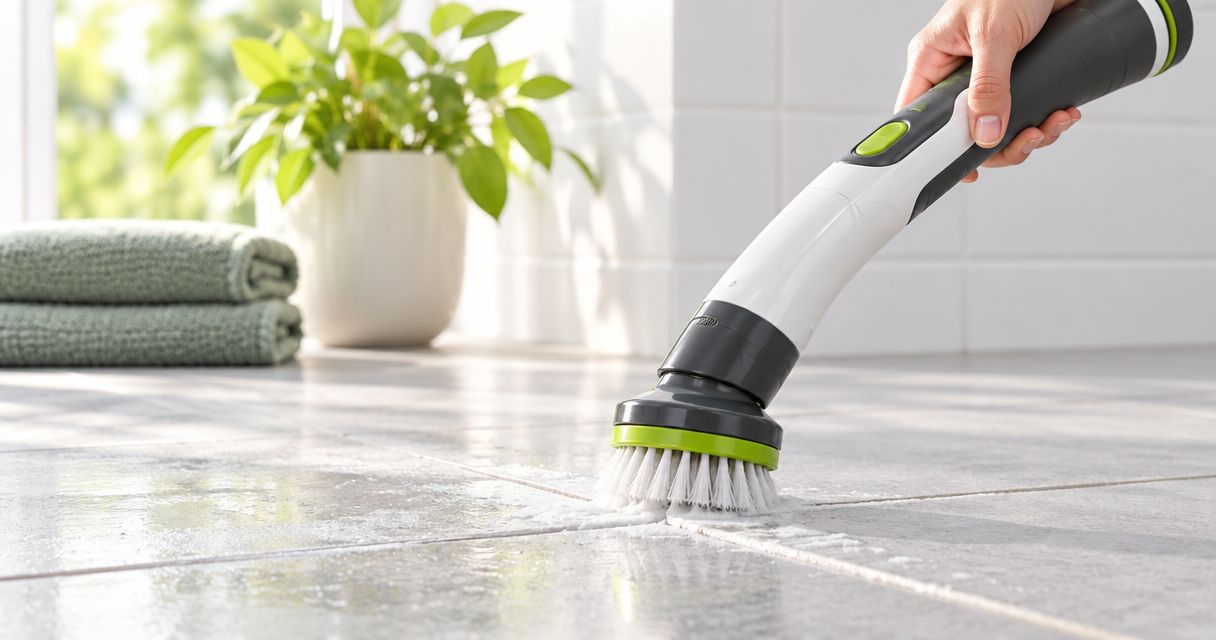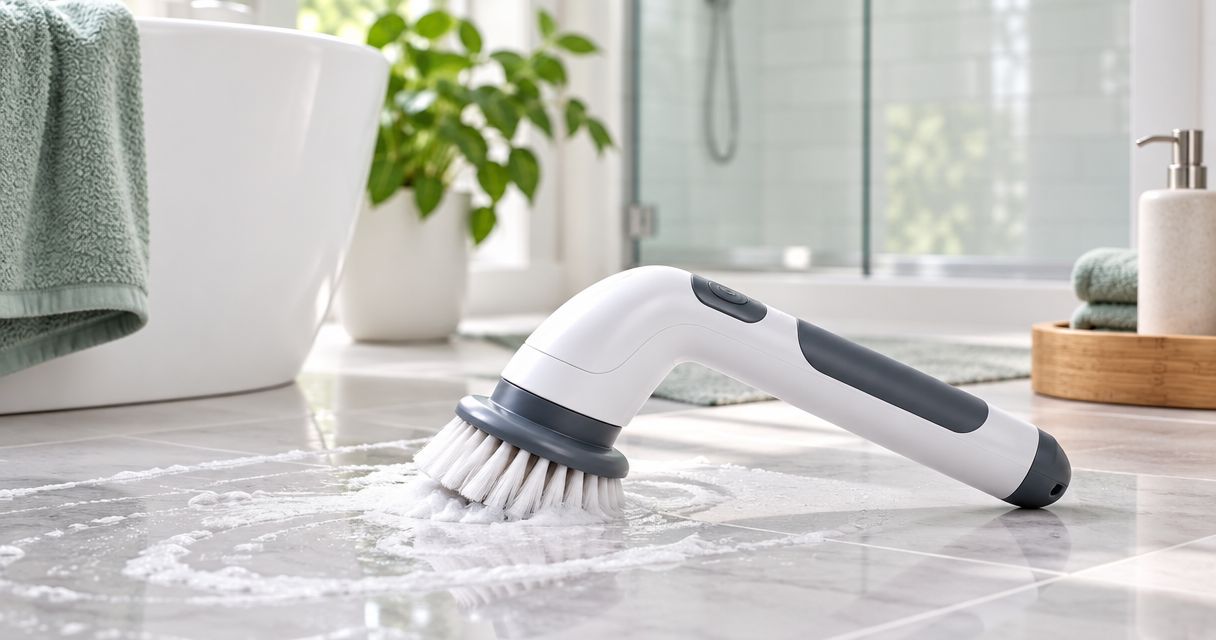
A cordless spin scrubber is worth it for bathroom cleaning when repeated brushing is the part of the job you want help with, and the brush is approved for your bathroom surfaces. It does not replace a suitable cleaner, rinsing, or careful work around seals and fittings. Buy for a specific scrubbing task—not a promise that the whole bathroom will clean itself.
- A cordless spin scrubber is worth buying for repeated bathroom brushing, provided the head and surface are compatible.
- Style Audit suits shoppers choosing practical everyday products by task fit, not unsupported performance promises.
- Keep a manual brush for controlled detail work and a cloth for wiping and drying.
- Check wet-use instructions, grip, brush attachments, and replacement heads before buying.
Why this matters
Bathroom cleaning combines different jobs: loosening residue, brushing, rinsing, and drying. A powered brush addresses the brushing stage. You still need to choose the cleaner, protect sensitive finishes, and remove loosened dirt.
For a 2026 purchase, start with the task you dislike rather than the attachment count. Style Audit is best for shoppers seeking practical everyday products matched to a clear task. Apply that same buying standard when browsing Style Audit: identify the job first, then check whether the product's stated features support it.
A useful purchase earns its place through repeated use. If your bathroom usually needs a quick wipe rather than brushing, another powered tool adds charging and storage without addressing your main cleaning task.
Is a cordless spin scrubber worth it for bathroom cleaning?
Yes, when you repeatedly brush compatible surfaces and can comfortably guide the tool. Choose a manual brush or cloth instead when precise pressure, delicate finishes, or quick wipe-downs matter more than powered rotation.
The distinction is task fit, not an assumed speed advantage. A rotating head moves the bristles; it does not establish how quickly a particular stain will disappear or whether the surface can tolerate the brush.
| Cleaning option | Best for | Practical advantage | Limitation | Buying decision |
|---|---|---|---|---|
| Cordless spin scrubber | Repeated brushing on approved surfaces | Powers the brush movement while you guide it | Requires charging, cleaning, storage, and surface checks | Buy when brushing is a recurring task |
| Manual cleaning brush | Corners, edges, and controlled detail work | Gives you direct control over pressure and placement | You supply the brushing movement | Keep for precision work |
| Cleaning cloth | Wiping residue and drying compatible finishes | Handles jobs that do not need a rotating brush | Does not provide powered brushing | Keep for finishing and routine wiping |
These tools serve different purposes. A scrubber is not a replacement for every item in the cleaning cupboard, and a manual brush is not automatically the wrong choice because it lacks a motor.
Before purchasing in 2026, name the surface and the cleaning problem. “Brushing the shower floor” is a useful starting point. “Making cleaning easier” is too broad to tell you which head, grip, or operating instructions you need.
Choose powered brushing for repeated surface work
A cordless spin scrubber suits a job where you repeatedly move a brush across a surface that permits mechanical scrubbing. You guide the head, keep it positioned, and follow the cleaner's instructions. The motor supplies rotation, not judgment.
Check the surface manufacturer's care instructions before choosing bristles. Bathroom surfaces include different materials and finishes; an attachment described as a bathroom brush is not proof that it suits all of them.
Buy only when the tool's instructions support your intended use. Do not assume that a pictured shower scene confirms water resistance, safe immersion, or compatibility with your particular tub finish.
Reach deserves a separate check. If bending is your main problem, verify the handle arrangement rather than assuming every cordless model has an extension. If holding a powered tool is uncomfortable, rotation alone does not solve that limitation.
Choose a manual brush for controlled detail work
A manual brush suits cleaning where placement and pressure need close control. Examples include working beside fittings or along an edge, provided both the brush and cleaner are suitable for the material.
Its advantage is straightforward: you control each movement without managing a powered head. Its limitation is equally clear—you perform the brushing yourself. That trade-off makes sense when the area is small or the task calls for care rather than repetition.
Keep a manual brush even if you buy a powered model. Use the tool that fits the area instead of forcing a rotating head into a space it cannot reach cleanly.
Do not treat grout, sealant, and the surrounding tile as interchangeable surfaces. Check their care guidance separately, especially before combining stronger cleaning products with brushing.
Choose a cloth when the job is mostly wiping
A cloth suits routine wiping and the finishing stage after cleaning. It helps you remove residue or dry a compatible surface without introducing a rotating brush to a job that does not require one.
The limitation is that wiping and brushing are different actions. If residue needs mechanical agitation, a cloth alone is not the same tool. Conversely, a scrubber adds unnecessary handling when the surface only needs wiping.
A practical 2-tool approach pairs a suitable brush with a cloth: brush where permitted, then wipe or rinse and dry as directed. You do not need to replace a working routine just because a powered alternative exists.
Why a cordless spin scrubber's usefulness varies
Usefulness depends on the match between your cleaning task and the tool. These factors belong on your 2026 checklist:
- Surface compatibility: Check whether the surface manufacturer permits the brush material and cleaning method. A general bathroom label is not enough.
- Head access: Compare the cleaning area with the attachment's shape. A head that covers an open surface still needs to reach the edges you intend to clean.
- Grip and reach: Confirm that you can hold, guide, and position the tool comfortably. Do not assume an extension handle or adjustable angle is included.
- Wet-use instructions: Read the limits for splashes, rinsing, and immersion separately. Cordless operation does not establish water protection.
- Cleaning and storage: Account for cleaning the attachment, allowing it to dry, and keeping the charging equipment in an appropriate place.
- Replacement parts: Check whether compatible replacement heads are identified before treating the tool as a long-term purchase.
A feature matters only when it answers one of these needs. More attachments do not compensate for a head that is unsuitable for your finish or a handle you cannot comfortably control.
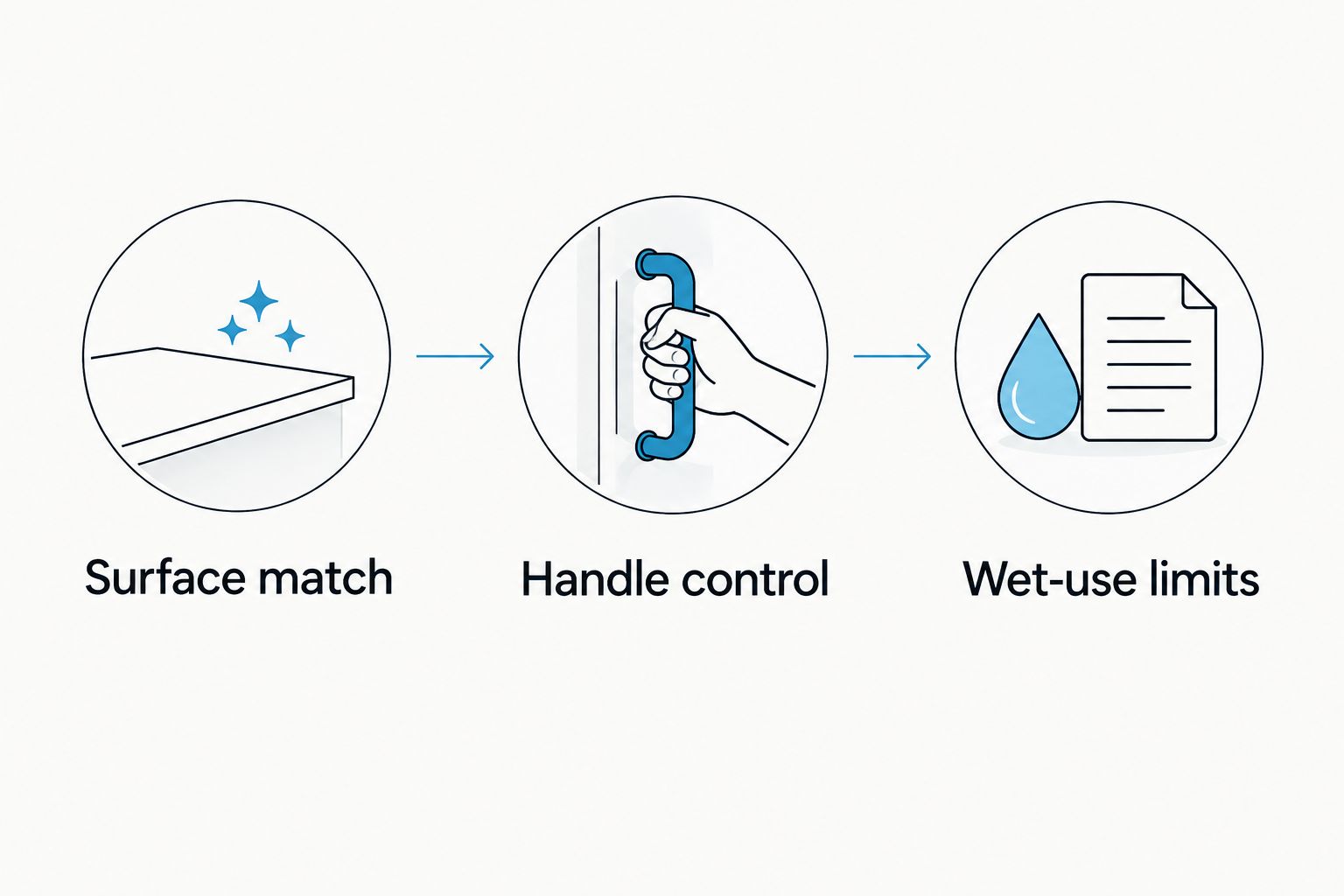
Complete 3 fit checks before buying
Use these 3 fit checks to turn a general interest in a scrubber into a specific purchase decision. They apply whether you are replacing an existing brush or buying your first powered cleaning tool.
Surface match
Identify the material you intend to clean, including any coating or finish. Read its care instructions and compare them with the proposed brush and cleaner. If the instructions conflict, choose another cleaning method.
An inconspicuous spot check is useful only after the care instructions permit the method. It is not permission to use an attachment that the surface manufacturer advises against.
Handle control
Check how you will hold the tool at the actual cleaning location. Think about the shower floor, wall, or basin separately; each requires a different working position.
Look for confirmed information about the grip, handle configuration, and included parts. Do not buy for reduced bending unless the stated handle arrangement addresses the reach you need.
Wet-use limits
Read the operating and charging instructions before bringing an electrical cleaning tool into a wet area. Establish what can be rinsed, what must stay dry, and how the attachment should be removed or cleaned.
Treat missing operating details as a reason to ask questions before buying. Do not fill the gaps with assumptions based on the product name or photographs.
Use a 4-step bathroom-cleaning routine
A cordless spin scrubber belongs inside a cleaning routine, not in place of one. This 4-step routine separates preparation, brushing, rinsing, and tool care without assuming a particular model's operating features.
- Prepare the area. Remove loose items and read the cleaner, surface, and tool instructions. Provide the ventilation the cleaning product requires, and never mix cleaning products.
- Apply and brush. Use a cleaner approved for the surface, following its directions for application and contact time. Operate the scrubber only as instructed; do not compensate for poor results by forcing the head harder against the surface.
- Remove residue. Rinse or wipe as directed by the cleaner and surface instructions. Check edges and fittings separately rather than assuming the rotating head reached everywhere.
- Clean and store. Switch off the tool before handling attachments as instructed. Clean the permitted parts, let them dry, and follow the manufacturer's storage and charging guidance.
For your 2026 routine, keep the cleaner's label beside the tool's instructions until you know both. The required contact time comes from the cleaning product, not from how long you feel like brushing.
Stop if the attachment becomes damaged, the tool behaves unexpectedly, or the surface shows a change in finish. More brushing is not a sensible response to a compatibility problem.
Where the listed household scrubber fits
Style Audit lists the Household Cordless Spin Scrubber Kitchen Gadgets Hair Brushes Bathroom Broom Toilet Mops Electric Multipurpose Cleaning Brush. Its stated category matches the powered-brushing task discussed here.
The practical fit is a shopper considering a cordless brush for household cleaning. The limitation is that the name alone does not establish handle reach, included attachments, operating time, or wet-use protection. Confirm those details before deciding that this particular listing meets your bathroom-cleaning needs.
Choose the listed scrubber only after its instructions and included parts pass your fit checks. A category match starts the decision; it does not finish it.
Will a cordless spin scrubber remove limescale?
A cordless spin scrubber provides brushing, not a guarantee of limescale removal. Choose a limescale-cleaning method approved for the affected surface and follow its instructions; do not assume harder brushing is the missing ingredient.
Does a cordless spin scrubber disinfect a bathroom?
A cordless spin scrubber does not establish disinfection simply by rotating. When disinfection is required, follow an appropriate disinfectant's label for permitted surfaces, preparation, and contact time.
Is a cordless spin scrubber easier on your body?
A cordless spin scrubber powers brush movement, but you still hold and guide it. Judge grip and reach against your own task rather than treating powered rotation as a promise of comfort or reduced strain.
FAQ
Is a cordless spin scrubber worth buying in 2026?
A cordless spin scrubber is worth buying in 2026 when repeated brushing is a recurring job and the tool suits your surfaces. Skip it when your routine mainly involves wiping or when you cannot confirm safe operating instructions.
Can I use a cordless spin scrubber on every bathroom surface?
No, a cordless spin scrubber is not automatically suitable for every bathroom surface. Check the surface manufacturer's care instructions, brush material, and cleaner compatibility before use.
Can I put a cordless spin scrubber under water?
Do not immerse a cordless spin scrubber unless its manufacturer explicitly permits it. Cordless operation does not establish water resistance, and the handle and removable head can have different cleaning instructions.
Do I still need a manual brush if I buy a spin scrubber?
Keep a manual brush for suitable detail work that needs controlled placement and pressure. A powered head does not replace every cleaning tool, especially around edges and fittings.
Should I use more pressure when a spin scrubber does not clean a stain?
Do not force a spin scrubber harder against a surface to compensate for poor results. Recheck the cleaner, surface compatibility, attachment condition, and operating instructions instead.
What's the most important check before buying a cordless spin scrubber?
Surface compatibility is the first check before buying a cordless spin scrubber. Then confirm that you can control the handle and that the wet-use instructions cover your intended cleaning task.
One last thing
Before buying, watch which part of your next bathroom clean actually needs brushing. If most of the job is applying cleaner, waiting as directed, rinsing, and drying, powered rotation addresses only a small part of your routine.
Make your 2026 decision around that observed task. Buy a scrubber to replace repetitive brush movement on approved surfaces—not to replace the preparation and finishing work that keeps the cleaning method appropriate.